As an Amazon Associate we earn from qualifying purchases. This comparison is independent. We have not had an R36 Ultra X in hand, so every claim about it below is attributed to the listing or spec record it came from.
The R36 Ultra X is a screen-and-shell refresh of the R36 Ultra, not a new generation. Every source that names a chip — the neutral spec record and a factory-side wholesale sheet alike — puts the same RockChip RK3326 inside it, so nothing runs faster or emulates further than it does on the Ultra you already know.
What changes is the glass. Sellers list the X with a 4.5-inch IPS panel, and the spec record gives it as 1024×768 in a 4:3 shape, against the Ultra’s independently reviewed 4-inch 720×720 square screen. That genuinely changes how games are framed — and it brings three catches the bullet points leave out: conflicting battery figures, no documented video output, and a body your 4-inch Ultra case and screen protector will not fit.
Quick picks
- Best overall — the better-documented Ultra: R36 Ultra. For most buyers. It is the device the X is derived from, and the one with an independent hands-on spec sheet behind it: 4-inch 720×720 IPS at 254.56 PPI, RK3326 with Mali-G31 MP2, 3500 mAh estimated at 4-5 hours. The square panel is a real advantage for Game Boy and vertical arcade.
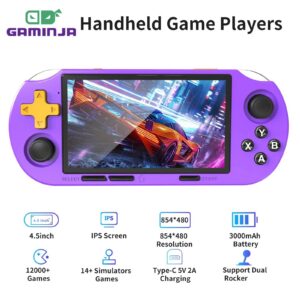
- Best 4.5-inch screen we actually stock: ANS16. For the shopper whose only goal is a bigger screen. A different device, not an Ultra X: 4.5-inch full-fit IPS at 854×480, a 1.2GHz dual-core chip, 175 x 75 x 25 mm and 195 g.
- Best for longer sessions: R36 Max. For buyers who care about runtime more than screen size. Same RK3326 platform and a 4.0-inch HD IPS screen, with a 4000 mAh cell instead of an unresolved 3000-versus-3500 mAh claim. Ships with console, battery and charging cable.
- Best if you want an actual speed increase: R36 Pro. For anyone hoping the X is faster. A bigger screen does not raise the emulation ceiling; a different chip does. The Pro uses the RK3566 rather than the RK3326, with a 4.0-inch IPS screen and a 4000 mAh battery.
- Smallest, simplest way in: R36S. For pocket carry and first-time buyers. 3.5-inch IPS, RK3326, 2600 mAh — same chip family as both Ultras, so you trade screen size and battery, not performance.
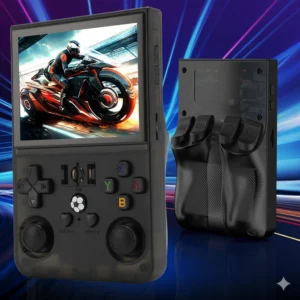

Short answer: what the R36 Ultra X changes (and what it doesn't)
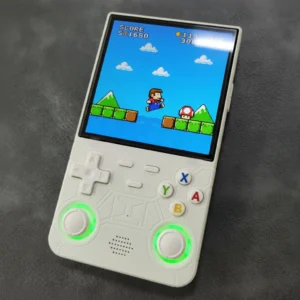
Treat the Ultra X as a batch and naming change, not a generational one. The handhelds.wiki spec record lists it with an RK3326 SoC, 1GB LPDDR3 RAM, a 4.5-inch 1024×768 IPS screen in 4:3, Linux, 8GB of internal storage, microSD expansion, Wi-Fi, stereo speakers and a 3.5mm jack, in a vertical form factor. The hands-on figures for the standard R36 Ultra read RK3326, Mali-G31 MP2, 1GB DDR3 and a 4-inch 720×720 panel at 254.56 PPI. The display is the one substantial hardware difference; internal storage and speaker count also differ between the two spec sheets.
What genuinely moves
- Screen: a 4.5-inch 1024×768 4:3 panel in place of the Ultra’s 4-inch 720×720 square, per the spec record.
- Front glass: tempered glass over the panel, reported by r36smax.com — a site in our own network, so corroboration rather than independent verification.
- Storage configurations: 64GB and 128GB options, with one marketplace variant also advertising RGB-lit joysticks.
What stays the same
- RK3326 with Mali-G31 MP2 and 1GB of RAM — a wholesale sheet specifies the CPU as a Cortex-A35 at 1.5GHz.
- A Linux stock system, Wi-Fi (2.4GHz on the X), a 3.5mm headphone jack and microSD expansion.
The spec record dates the Ultra X to 05/2026. Newer on the calendar is not newer in the silicon, so be wary of any listing that treats the name as proof of an upgrade. For the baseline device in full detail, our R36 Ultra specifications page is the reference this comparison leans on.
| Spec | R36 Ultra (hands-on review data) | R36 Ultra X (listings / spec record) |
|---|---|---|
| Screen size | 4.0-inch IPS | 4.5-inch IPS — but one wholesale page's own title says 4-inch (conflict) |
| Resolution | 720×720 | 1024×768 per spec record; a wholesale sheet says only "720" (conflict) |
| Aspect ratio | 1:1 square | 4:3 |
| Pixel density | 254.56 PPI | Not published |
| Front glass | Not stated | Tempered glass (secondary report) |
| CPU | RockChip RK3326 | RK3326; wholesale sheet specifies Cortex-A35 at 1.5GHz |
| GPU | Mali-G31 MP2 | Mali-G31 MP2 |
| RAM | 1GB DDR3 | 1GB LPDDR3 |
| Internal storage | 2GB eMMC | 8GB per spec record; retail listing advertises a 64GB card |
| Card expansion | microSD | microSD, reported up to 256GB (secondary report); 64GB and 128GB configurations sold |
| Battery | 3500mAh, estimated 4-5 hours | 3000mAh (retail listing) vs 3500mAh (wholesale sheet) — unresolved |
| Charging | 5V/2A | USB Type-C; listing claims about 2 hours |
| Wi-Fi | Yes | Yes, 2.4GHz |
| Video output | Two USB-C ports including OTG; no HDMI listed | None, per the spec record |
| Audio | Single front-facing mono speaker, 3.5mm jack | Stereo speakers and 3.5mm jack per spec record |
| Operating system | Custom Linux build on the EmuELEC frontend | Linux, open source; frontend not named |
| Size / weight | 144.78 x 83.82 mm, about 204 g | Not published |
| Emulation ceiling | PSX and earlier fully; partial Dreamcast and PSP | Same chip, so the same ceiling |
R36 Ultra X vs R36 Ultra: specs as published, with conflicts flagged. Ultra column from hands-on review data; Ultra X column from the handhelds.wiki record plus retail and wholesale listings.
The specs side by side — and where the sources disagree
The table above uses hands-on review data for the Ultra column, and the handhelds.wiki record plus retail and wholesale listing copy for the Ultra X. We flagged the rows where sources contradict each other rather than quietly picking a winner. Those contradictions are the most useful thing a shopper can know about this model.
The three claims not to trust blindly
- Battery: the retail listing says 3000mAh. A wholesale sheet for the same name says 3500mAh. Two numbers, one model — so we publish no runtime figure for the X.
- Resolution: handhelds.wiki gives 1024×768 in 4:3. The wholesale sheet says only “720”. Buy from a listing that commits to 1024×768 in writing.
- Screen size: that same wholesale page’s title says 4-inch while its own specification table says 4.5-inch. The “Ultra X” label is applied inconsistently at the factory level, never mind by resellers.
“Linux open source” is not a performance spec
Both devices are marketed as open-source Linux handhelds. On the Ultra, that stock software is a custom Linux build running the EmuELEC frontend; the X is listed simply as Linux, with no frontend named. Either way the phrase describes the operating system, not the speed — a Linux build on an RK3326 performs like an RK3326.
Preloaded-title counts (“20+ simulators”, 20,000 or 35,000 games) belong in the same bucket. They are marketing copy, they vary wildly between listings for the same shell, and the clean way to fill either device is with your own legally obtained backups.
Square 1:1 versus 4:3: why screen shape beats the inch count
This is the part listings skip, and it is the real decision. The Ultra’s panel is square — 720×720 at 1:1 — and the hands-on review called the screen the device’s strongest feature, helped by 254.56 PPI. A square panel suits Game Boy, Game Boy Color and vertical arcade boards, because those images fill the glass instead of sitting in letterbox bars.
The X’s 4.5-inch 1024×768 panel is 4:3, the native shape of NES, SNES, Genesis and PlayStation output. Those systems fill more of the screen than they do on the Ultra; your Game Boy library no longer fills it edge to edge. The honest question is not “bigger or smaller” but which half of your library matters more?
Two expectation-setters
- More pixels, same chip. 1024×768 is a larger frame than 720×720, driven by the same RK3326. A higher-resolution panel does not sharpen emulation on its own, and it gives the hardware more to push.
- Tempered glass is about scratches. The reported glass front on the X is a durability change, not an image-quality one.
If the square screen appeals to you, the standard R36 Ultra is the one to get — and it is the variant with an independent review behind it rather than a spec stub. Our R36 Ultra review covers how it handles in the hand.
Performance: same chip, same ceiling
There is no performance story here, and that is the most valuable thing we can tell you. Both devices run the RK3326 with a Mali-G31 MP2 GPU and 1GB of RAM. The hands-on verdict on that chipset is blunt: full access to PlayStation (PSX) and every console before it, with only partial accessibility into Dreamcast and PSP. A 4.5-inch screen changes none of it.
So treat any “Ultra X” listing that implies a faster processor or a new generation as a red flag — no source that actually names a chip supports it. For a system-by-system picture of what the platform handles well and where it stumbles, read our R36 Ultra emulation guide rather than per-game promises on a product page.
A genuine step up in capability has to come from a different chip class. In our catalog that means the R36 Pro, built on the RK3566 instead of the RK3326, with a 4.0-inch IPS screen and a 4000 mAh battery. It is the honest answer to “I want more than the Ultra can do”. A bigger panel is not.
For the full side-by-side, read R36 Pro vs R36 Ultra: chip, screen shape, sticks and battery compared.
Battery, charging and TV output: read this before you order
Battery. We will not quote a runtime for the Ultra X, because the sources cannot agree on the cell. The retail listing says 3000mAh and claims up to roughly six hours of play with about two hours of USB-C charging; a wholesale sheet for the same model name says 3500mAh. For context, the standard Ultra’s 3500mAh pack was independently estimated at 4-5 hours, charging at 5V/2A. A larger, higher-resolution panel does not improve on that, so the six-hour figure deserves scepticism until someone measures a retail unit.
If runtime is your priority, buy for it directly. The R36 Max puts a 4000 mAh cell on the same RK3326 platform behind a 4.0-inch HD IPS screen, with no battery-spec contradiction to resolve. Our battery guide covers realistic expectations and the settings that stretch any RK3326 handheld.
TV output. Do not assume it. The handhelds.wiki record lists the Ultra X’s video output as none. The standard Ultra’s port set is a 3.5mm audio jack plus two USB-C ports with OTG — useful for peripherals, not a guaranteed route to a television. If big-screen play is part of your plan, start with our R36 Ultra TV output guide and the HDMI-capable console page instead of gambling on an unlisted feature.
Audio. Both keep a 3.5mm headphone jack. Speaker counts differ by source: the reviewed Ultra has a single front-facing mono speaker between the analog sticks, while the spec record lists stereo speakers for the X.
Storage, firmware and whether your accessories carry over
Storage. The Ultra X is sold in 64GB and 128GB configurations with microSD expansion — a secondary report puts card support at up to 256GB — while its spec record lists 8GB of internal storage. The standard Ultra pairs a small 2GB eMMC with a microSD card you can swap. In both cases the advertised capacity is mostly the bundled card, not the device.
That is why we suggest starting with a card you chose. A branded microSD such as the Samsung 128GB MicroSD Card, imaged yourself, is more predictable than an unlabelled bundled card, and it keeps the original intact as a fallback. Our SD card guide walks through backing up, imaging and replacing.
Firmware. The Ultra’s stock software is a custom Linux build on the EmuELEC frontend, and the X is listed as Linux too. But custom firmware images are board-specific, and “Ultra X” covers more than one batch. Identify your exact board before you flash anything, and use our firmware guide and WiFi and PortMaster guide as the starting point rather than a generic tutorial.
The accessory warning nobody prints
A 4.5-inch Ultra X will not fit silicone cases, hard shells or tempered glass cut for the 4-inch R36 Ultra (roughly 144.78 x 83.82 mm and about 204 g). MicroSD cards and USB-C cables transfer fine; anything shaped to the body does not. Buy size-matched protection — our R36 Ultra accessories page covers what to look for.
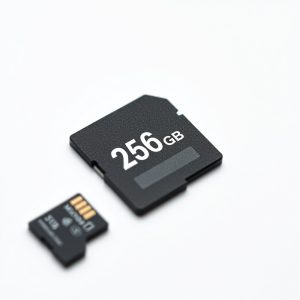 Samsung 128GB MicroSD CardCheck Price →
Which should you buy?
To be upfront: we do not carry an Ultra X SKU. Nothing below is an Ultra X, and the 4.5-inch option in particular is a different device.
You already own an R36 Ultra
Skip it. You gain screen area and tempered glass; you lose your cases and screen protectors, you accept a battery figure two sources dispute, and you gain zero speed. Upgrade only if the 4-inch panel is genuinely too small for your eyes — and then consider a bigger device, not a near-identical one.
You own neither
- Want the square 1:1 screen and the best-documented unit: the R36 Ultra.
- Want a 4.5-inch screen from our catalog: the ANS16. This is not an Ultra X — it is a separate handheld with a 4.5-inch full-fit IPS panel at 854×480 (lower than the X’s quoted 1024×768), a 1.2GHz dual-core processor, a 3000mAh battery rated 4-6 hours, and a 175 x 75 x 25 mm, 195 g body.
- Want the longest sessions: the R36 Max and its 4000 mAh cell.
- Want more than RK3326 can deliver: the R36 Pro on the RK3566.
- Want the smallest entry point: the R36S — 3.5-inch IPS, RK3326, 2600 mAh.
Still torn between family members? Our R36 Ultra vs R36S breakdown settles the small-versus-large question, and the three-way Ultra vs R36S vs Max comparison covers the rest.
How to avoid a mislabelled "Ultra X" listing
“Ultra X” is a seller-level name applied across batches, so two listings using it can describe different hardware. One wholesale page says 4-inch in its title and 4.5-inch in its specification table. Retail and wholesale copy disagree on the battery. Resolution is stated precisely in one place and vaguely in another. Check the listing, not the name.
Four checks before you pay
- A stated 4.5-inch panel in both the title and the spec table. If they disagree, assume the smaller one.
- A stated resolution of 1024×768. “HD” or a bare “720” is not a specification.
- Real photos of the actual unit, showing the bezel and button layout — not rendered marketing art shared across a dozen brand names.
- A seller who names the chip. RK3326 is the expected answer. A seller who will not say, or who claims something faster, is one to walk away from.
Ignore preloaded-title counts completely; they say nothing about the screen, the cell or the firmware. For the full routine, including the rebrands that share this shell, see how to spot a fake and our where to buy guide. One rule protects you in every case: order from a listing with a real return window, so a mislabelled unit costs you a shipment and not a device.
Frequently asked questions
Is the R36 Ultra X a genuinely new model?
It is a refresh of the same platform, not a new generation — every source that names a chip puts the same RK3326 inside it, and the change is the shell and the 4.5-inch panel. “Ultra X” is a seller-level name, and listings using it disagree on screen size, resolution and battery.
Is the R36 Ultra X faster than the R36 Ultra?
No. Both use the RK3326 with a Mali-G31 MP2 GPU and 1GB of RAM, so the emulation ceiling is identical: comfortable through PSX and everything before it, with only partial success on Dreamcast and PSP. If a listing claims a performance jump, distrust it.
What is the Ultra X’s screen resolution?
The neutral spec record lists a 4.5-inch 1024×768 IPS panel in 4:3, while a wholesale sheet says only “720”. We have not measured a unit, so buy only from a listing that states 1024×768 in writing.
How big is the Ultra X battery, really?
Sources conflict — the retail listing says 3000mAh and a wholesale sheet says 3500mAh for the same model name, so we publish no runtime for it. For reference, the standard R36 Ultra’s 3500mAh pack was independently estimated at 4-5 hours, and a larger, higher-resolution screen does not improve on that.
Can the R36 Ultra X output to a TV?
Do not assume so: the handhelds.wiki entry records its video output as none. If big-screen play matters, choose a model whose TV output is documented and start with our TV output and HDMI guides.
Will my R36 Ultra case and screen protector fit the Ultra X?
No. The X is a 4.5-inch body against the Ultra’s 4-inch, so silicone cases, hard cases and tempered glass cut for the Ultra will not fit. MicroSD cards and USB-C cables do carry over.
Our pick: the R36 Ultra
Check Price on Amazon →Opens in a new tab · As an Amazon Associate we earn from qualifying purchasesNew handhelds, tested first
Occasional emails when a model is worth your money. No spam.